
Save your natural tooth, end the pain, and stop the infection before it spreads.
A toothache that wakes you up at night, sensitivity that lingers long after your coffee has gone cold, swelling around the gum. These are signals that something is wrong inside the tooth. Part of our restorative dentistry services at Advanced Dental Solutions in Torrance, root canal treatment is the standard, proven approach to resolving that infection and keeping your tooth intact.
- Gentle, comfortable procedure performed under local anesthesia
- Saves your natural tooth without extraction
- Most straightforward cases completed in a single visit
- Most PPO insurance accepted
What Is Root Canal Treatment?
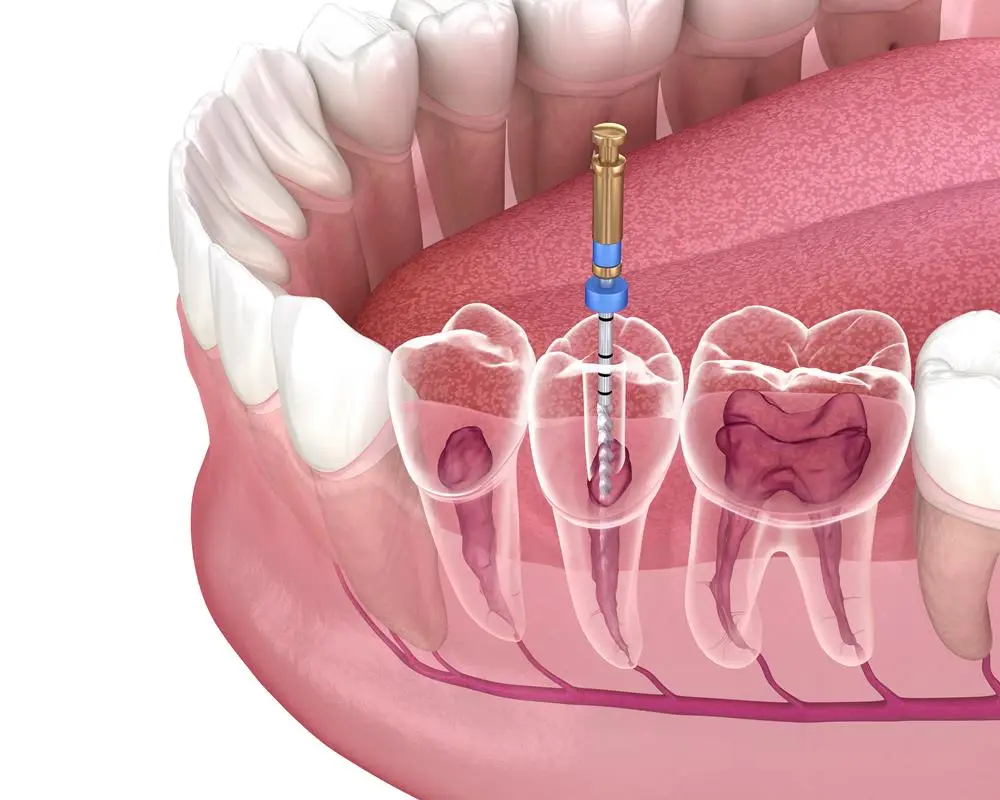
Root canal treatment removes infected or damaged tissue from inside a tooth to stop the infection and help save your natural tooth. Your dentist cleans and disinfects the root canal system, then seals the tooth to help keep bacteria from getting back inside.
Deep decay, cracks, damaged fillings, or dental trauma can allow bacteria to reach the pulp at the center of the tooth. Once the pulp is infected, it will not heal on its own. A dental exam and X-rays are needed to confirm whether a root canal is the right treatment or if another type of care makes more sense.
What Are the Signs You May Need a Root Canal?
Severe tooth pain, lingering hot or cold sensitivity, pain when biting, swelling, or changes in tooth color may be signs that the pulp inside a tooth is damaged or infected. These symptoms do not always mean you need a root canal, but they should be checked with a dental exam and X-rays before the problem gets worse.
| Symptom | What It May Mean | Why It Should Be Checked |
|---|---|---|
Severe Tooth Pain |
Pain may be linked to inflammation or infection inside the tooth. | Ongoing or worsening pain should be evaluated to find the cause and determine the right treatment. |
Lingering Hot or Cold Sensitivity |
Sensitivity that continues after the hot or cold item is gone may point to damaged pulp. | A dentist can test the tooth and use X-rays to check whether the pulp may be affected. |
Pain When Biting or Chewing |
Pressure-related pain may be connected to inflammation, infection, or damage to the tooth. | The cause should be identified before continued chewing places more stress on the tooth. |
Swollen or Tender Gums |
Swelling near a specific tooth may be related to an infection around the tooth or root. | Dental infections can worsen or spread and should be examined rather than watched at home. |
A Pimple on the Gums |
A recurring gum bump or fistula may form when an infection drains through nearby tissue. | The bump may come and go, but the source of the infection can still remain inside the tooth. |
Tooth Discoloration |
A tooth that becomes darker may have damage to the pulp, especially after dental trauma. | An exam can help determine whether the color change is cosmetic or related to damage inside the tooth. |
How Root Canal Treatment Works at Advanced Dental Solutions
Consultation and Diagnosis
A thorough examination includes X-rays to map the root canal system and determine how far the infection has progressed. Your provider reviews the findings with you and builds a treatment plan specific to your tooth before any procedure begins.
Anesthesia
Local anesthesia numbs the tooth and surrounding tissue. Most patients report feeling pressure during the procedure but not pain. Sedation options, including nitrous oxide and oral sedation, are available for patients who want additional comfort.
Removing the Infected Pulp
A small opening is created in the crown of the tooth. Specialized instruments carefully remove the damaged or infected pulp from the root canal system.
Cleaning and Shaping
The root canals are thoroughly cleaned, disinfected, and shaped to prepare them for filling. This step removes remaining bacteria and reduces the risk of reinfection.
Filling the Canal
The cleaned canals are filled with gutta-percha, a biocompatible rubber-like material, then sealed with adhesive cement. This closes off the interior of the tooth completely.
Restoring the Tooth
A crown or filling is placed over the treated tooth to restore its strength and function. For most back teeth, a crown is the recommended option for long-term durability.
What to Expect After Your Root Canal
Most patients can return to normal daily activities within one or two days after a root canal. Mild tenderness around the treated tooth is common during the first 24 to 48 hours and may improve with over-the-counter pain medicine when it is safe for you to take.
Start with softer foods while the tooth is sensitive and follow the care instructions provided by your dentist. Contact the office if pain or swelling gets worse instead of better or if you develop new symptoms after treatment. Your provider will also complete or monitor any needed final restoration, such as a dental crown, to help protect the treated tooth long term.
Why Patients in Torrance Choose Advanced Dental Solutions for Root Canal Treatment
When looking for a trusted root canal provider in Torrance, clinical experience, clear treatment planning, and patient feedback can help you compare your options. Dr. Shawna Omid is a former faculty member of the UCLA School of Dentistry, and the practice she built follows one standard: use modern dental technology, explain what is happening and why, and never recommend treatment that is not right for the patient.
Root canals are often recommended when someone is already in pain and needs answers quickly. Dr. Mona Nejad and Dr. Matthieu Sullivan follow the same patient-first approach, so you understand your treatment options before any work begins. Most PPO plans are accepted, with financing available through CareCredit, Cherry, and the HFD Program.
What Our Patients Are Saying
Rated 5.0 stars across 120+ Google reviews.
Frequently Asked Questions About Root Canal Treatment
The procedure is performed under local anesthesia, so most people feel pressure and movement but not pain during treatment. What tends to hurt is the infection beforehand. Once the infected pulp is removed, the source of that pain is gone, and the tenderness that follows in the next day or two is typically manageable with over-the-counter medication. Most people are surprised by how unremarkable the experience is compared to what they expected going in.
The difference comes down to where the problem is. A filling addresses surface-level decay that has not reached the pulp. A root canal becomes necessary when the damage or infection has made it to the pulp itself, which a filling cannot fix. An exam and X-rays are all it takes to determine which applies to your tooth. Coming in when symptoms first appear, rather than waiting them out, tends to keep more treatment options available.
Keeping your natural tooth is almost always the better long-term outcome. When a tooth is extracted, the bone beneath it gradually loses density because there is no root to stimulate it. Adjacent teeth can begin to shift over time. Replacing the extracted tooth with an implant or bridge adds cost and additional procedures. A root canal preserves what you already have, maintains the structure of your jaw, and typically costs less overall than the extraction-plus-replacement path.
Root canals have a high long-term success rate. Most treated teeth last many years, often a lifetime, with proper care and a well-fitted crown. In some cases, a tooth can become reinfected due to complex root anatomy, a new cavity, or a failed seal. When that happens, a procedure called retreatment, which reopens and re-cleans the canals, can often save the tooth a second time. Your provider monitors treated teeth at regular checkups and catches any changes early.
This is one of the more common reasons people delay treatment, and it is worth understanding. When an infected pulp dies, the pain can stop, but the infection does not. It continues spreading through the root tip into surrounding bone and tissue, often without symptoms until the situation becomes more serious. A tooth that hurt and then suddenly stopped hurting without treatment is still worth having evaluated, not dismissed.
Root canal treatment is typically covered under most PPO dental plans as a restorative procedure, though the benefit percentage and any out-of-pocket portion depends on your specific coverage. At Advanced Dental Solutions, we accept most PPO insurance and will review your plan with you before treatment begins so there are no surprises. For costs not covered by insurance, or for anyone without coverage, financing through CareCredit, Cherry, and the HFD Program makes it possible to break the total into manageable payments. Cost is one of the most common reasons people put off dental work they know they need. In most cases, there are more workable options than people realize until they actually ask.
Most patients return to normal daily activities within one or two days after root canal treatment, sometimes called tooth nerve removal. Mild tenderness around the treated tooth may last for several days as the area settles. Softer foods and over-the-counter pain medicine may help when they are safe for you to use.
The tooth continues to heal internally over the following weeks. Contact your dentist if pain or swelling gets worse instead of better or if new symptoms appear after treatment.
Yes, sedation dentistry may be an option for some patients who feel anxious about root canal treatment or have difficulty staying comfortable during dental care. Advanced Dental Solutions offers sedation options based on your anxiety level, medical history, current medications, and the treatment being performed.
Your provider will review your health history before recommending sedation because the right option and level of monitoring vary by patient. Learn more about sedation dentistry in Torrance and the available comfort options before your appointment.
Schedule Your Root Canal Appointment in Torrance
If you have been dealing with tooth pain, or someone told you that you need a root canal and you are not sure what that actually means for you, starting with an evaluation is simpler than it sounds. Schedule an initial consultation for severe tooth pain Advanced Dental Solutions in Torrance and find out exactly what your tooth needs, what the procedure involves, and what it will cost before committing to anything. We accept most PPO plans, offer flexible financing, and will answer every question you have before treatment begins.