
Custom-fitted removable restorations that bring back full chewing function, clearer speech, and a complete smile.
Tooth loss affects more than how your smile looks. It changes how you eat, how you speak, and over time, how your face holds its shape as the underlying bone gradually recedes without tooth roots to support it. Dentures and partial dentures are part of our restorative dentistry services at Advanced Dental Solutions in Torrance, offering patients a reliable path to restored function and confidence whether they are missing a few teeth or an entire arch.
- Complete and immediate denture options available
- Partial dentures in traditional, flexible, and precision attachment styles
- Custom-fabricated to fit your specific mouth and bite
- Most PPO insurance plans accepted
What Are the Different Types of Dentures Available?
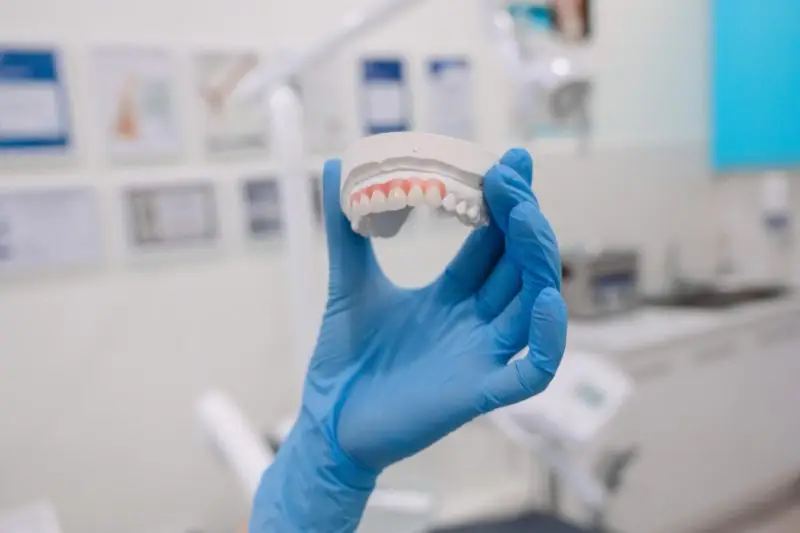
The main types of dentures are complete dentures and partial dentures. Complete dentures replace a full upper or lower arch, while partial dentures fill gaps when healthy natural teeth remain. The right option depends on how many teeth are missing, the health of your remaining teeth and gums, your bite, and how the denture needs to fit and function.
A dental exam and X-rays help your provider compare these factors before recommending a denture. Both complete and partial dentures are custom-made for your mouth, but the design, materials, and way they stay in place are different.
| Denture Type | Who It May Help | Available Options | Clinical Considerations |
|---|---|---|---|
Complete Dentures |
Patients who are missing all teeth in an upper or lower arch, or whose remaining teeth need to be removed. | Conventional complete dentures are made after the gums heal. Immediate dentures can be placed on the same day as extractions so the patient does not go without teeth. | Immediate dentures may need adjustments as the gums and bone change during healing. Conventional dentures generally allow a more stable initial fit after healing is complete. |
Partial Dentures |
Patients who are missing several teeth but still have healthy natural teeth that can remain in place. | Traditional partials use metal clasps, flexible partials use a softer gum-colored material, and precision attachment partials connect without visible clasps. | The condition and position of the remaining teeth affect support, stability, and which attachment design may be appropriate. |
If you want more stability than a traditional removable denture, implant-supported dentures may also be an option. Dental implants can help support a custom denture and improve how securely the restoration stays in place. The number and placement of implants depend on your available bone, oral health, and treatment needs, so a clinical evaluation is needed before this option is recommended.
What to Expect During the Denture Process
Getting a well-fitting denture takes several appointments spread over a few weeks. The first visit covers a full oral health examination, X-rays to evaluate bone structure, and detailed impressions of your gums and remaining teeth. From there, a customized treatment plan is outlined, any necessary extractions are scheduled, and fabrication begins. Complete dentures typically require five to seven appointments over the course of eight to twelve weeks. Partial dentures generally take four to five appointments over about a month.
Once your dentures are made, a try-in appointment confirms fit and appearance before the final version is delivered. Some soreness and a short adjustment period are completely normal in the first few weeks and settle on their own.
How Do I Properly Clean and Maintain My Dentures?
Clean your dentures every day with a soft denture brush and a nonabrasive denture cleaner, rinse them after meals, and remove them overnight unless your dentist gives you different instructions. Avoid regular toothpaste because it can scratch denture materials, and never use hot water because heat can warp the appliance.
Keep dentures moist overnight in plain water or an approved soaking solution. Patients with metal clasps or precision attachments should ask which cleaner is safe for those parts. Continue dental checkups about every six months so your provider can check the fit, examine your gums and remaining teeth, and address looseness or irritation before it worsens.
Why Patients in Torrance Choose Advanced Dental Solutions
Dr. Shawna Omid is a former faculty member of the UCLA School of Dentistry, and the standard at this practice has always been to give patients a complete picture of their options before asking them to commit to anything. Dr. Mona Nejad and Dr. Matthieu Sullivan bring that same care to every patient they see. If a different restorative approach would serve you better than a denture, your provider will say so directly and explain why. No patient is steered toward a treatment that does not fit their situation, and no patient is turned away for a complex case. Most PPO insurance plans are accepted, and financing is available through CareCredit, Cherry, and the HFD Program for patients who want to spread treatment costs over time.
What Our Patients Are Saying
Rated 5.0 stars across 120+ Google reviews.
Frequently Asked Questions About Dentures and Partial Dentures
Most dentures last between five and ten years with proper care, though that range depends on how well they are maintained and how much the underlying bone and gum tissue change over time. Bone continues to remodel after teeth are removed, which is why dentures that fit well at placement may feel noticeably looser several years later. Regular checkups allow your provider to catch these changes early and determine whether a reline or a full remake is the better path before fit becomes a daily problem.
Most dentists recommend removing dentures overnight to let the gum tissue recover from the pressure of daily wear. Wearing them around the clock can accelerate bone resorption and cause persistent irritation to the tissue underneath. Soaking them overnight also extends the life of the appliance itself. There are cases where short-term overnight wear is appropriate, and your provider will give you guidance specific to your situation rather than a blanket rule.
Modern dentures are fabricated to closely match the color, shape, and proportion of natural teeth and gum tissue, and the difference between a well-made custom appliance and an older or poorly fitted one is significant. A properly fitted denture supports your facial structure, positions your lips naturally, and does not read as artificial to someone looking at you. The materials and fabrication processes available today produce results that look considerably more natural than the appliances most patients associate with an older generation.
Complete dentures do change how you eat, particularly at first. Very sticky foods, hard items, and biting with the front teeth specifically can be difficult, especially with an upper complete denture. Most patients adapt over time and return to a fairly normal diet. Partial dentures, because they anchor to your remaining natural teeth, generally allow more biting force and a wider range of foods from the start. Your provider will walk you through what to expect based on which type of denture you receive.
A consultation is the only way to know for certain, but most patients who come in asking about dentures are already most of the way there. They have missing teeth affecting how they eat or feel about their smile, or they are anticipating extractions and want to understand what comes next. What a proper evaluation gives you is a clear picture of your bone structure, your remaining teeth, and which restoration actually fits your situation. Dentures are a strong solution for a lot of people, and if a different approach would serve you better, your provider will tell you that directly before you commit to anything.
Seniors should choose dentures based on the number of missing teeth, gum and bone health, hand strength, comfort, and the ability to clean and manage the appliance each day. Complete dentures may be appropriate when an entire arch is missing, while partial dentures can preserve healthy remaining teeth. Some patients may benefit from implant-supported dentures for added stability.
Age alone does not determine the right treatment. A dentist should examine the mouth, review medications and health conditions that may affect healing or dry mouth, and discuss fit, maintenance, cost, and treatment time before recommending an option.
A Complete Smile Is Worth the Conversation
A consultation at Advanced Dental Solutions starts with a thorough evaluation of your mouth, not a recommendation made before your teeth have been properly assessed. Book your appointment in Torrance and walk out knowing exactly what your treatment looks like, which type of denture fits your situation, how long the process takes, and what it costs. We accept most PPO plans and offer financing for patients who need it.