The dental work you’ve been putting off doesn’t have to feel the way you remember it.
Dental lasers replace the drill and scalpel for a wide range of procedures, from treating gum disease to removing decay to reshaping soft tissue. The laser targets only what needs to be treated, seals blood vessels as it works, and eliminates bacteria on contact. For most patients, that means a shorter appointment, a milder recovery, and a lot less reason to keep waiting. Part of our general dentistry services at Advanced Dental Solutions in Torrance.
- Gum and soft tissue procedures, often completed without sutures
- Cavity and decay treatment without the drill in many cases
- Periodontal therapy, whitening, and cosmetic gum work
What Dental Lasers Actually Do
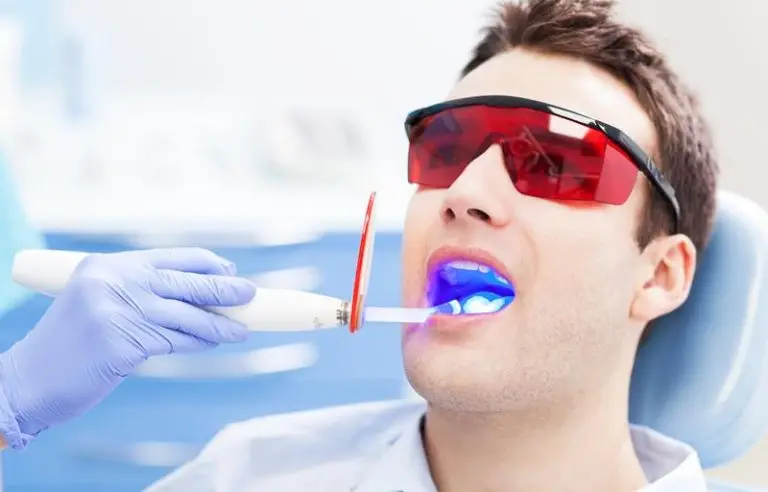
Dental lasers have been FDA-approved for dentistry since the 1990s. There are two types: soft tissue lasers, which treat gums and oral tissue, and hard tissue lasers, which work on tooth structure and bone. Both emit concentrated light energy at a calibrated wavelength, with settings adjusted for each procedure depending on whether the goal is cutting tissue, vaporizing decay, or stimulating healing.
- Seals blood vessels as it works, reducing bleeding during and after the procedure
- Eliminates bacteria on contact in gum disease and root canal applications
- Targets only the affected area, leaving surrounding healthy tissue intact
What Laser Dentistry Can Treat
Laser treatment is used across soft tissue, restorative, periodontal, and cosmetic applications. On the gum and soft tissue side: gum contouring, gingivectomy, frenectomy, crown lengthening, lesion removal, and gum depigmentation. For teeth and restorative work: cavity detection, decay removal, tooth preparation for crowns, root canal disinfection, and sealant application. Additional uses include laser-assisted whitening, cold sore treatment, tooth desensitization, TMJ therapy, and impacted tooth exposure. Most patients are surprised by how much ground the technology covers.
What to Expect During a Laser Dentistry Procedure
Evaluation
Your provider reviews the area, confirms a laser approach is right for your case, and takes any X-rays or photos needed. You leave knowing exactly what to expect.
Preparation
Many soft tissue procedures and restorative applications require little to no anesthesia. No needle is often the first thing patients notice is different.
Treatment
The laser is applied with precision. Most patients describe mild warmth or light pressure, and no sutures are needed for many procedures.
Recovery
Most patients return to normal activity within 24 to 48 hours. Your provider will give you a clear aftercare plan and timeline before you leave.
Why Patients in Torrance Choose Advanced Dental Solutions
Dr. Shawna Omid is a former faculty member of the UCLA School of Dentistry, and the standard at this practice has always been to invest in technology that actually improves the patient experience, not just the equipment list. Laser dentistry is part of that commitment. Dr. Mona Nejad and Dr. Matthieu Sullivan carry the same approach to every patient they see: explain what is happening, why it is being recommended, and what the alternatives are before anything is scheduled. If a conventional technique is the better option for your situation, you will hear that directly.
Most PPO insurance plans are accepted, and financing is available through CareCredit, Cherry, and the HFD Program for patients who want to spread the cost over time. The goal is to make the right treatment accessible, not to steer anyone toward what is simply most convenient.
What Our Patients Are Saying
Rated 5.0 stars across 120+ Google reviews.
Frequently Asked Questions About Laser Dentistry
For most patients, yes. Lasers minimize trauma to surrounding tissue, seal blood vessels as they work, and in many cases reduce or eliminate the need for anesthesia entirely. The sensation during a laser procedure is typically described as warmth or mild pressure rather than the vibration and discomfort associated with a drill. That said, every case is different, and your provider will discuss what to expect for your specific procedure before you begin.
Dental lasers have been used clinically for decades and are FDA-cleared for a wide range of dental applications. The technology is well-established, not experimental. Protective eyewear is worn by both the patient and provider during treatment, and the parameters are adjusted precisely for each procedure type. If there is any reason a laser approach is not appropriate for your case, your provider will tell you before moving forward.
Not in every situation, but in more cases than most people realize. For early cavity preparation, decay removal, and several soft tissue procedures, a laser can accomplish what a drill previously did without the noise, vibration, or anesthesia requirement in many instances. More complex restorative work involving extensive decay or significant structural shaping may still call for conventional instruments. The honest answer is that it depends on your case, and the consultation is where that gets determined.
Recovery from laser gum treatment is noticeably faster than recovery from procedures performed with a scalpel. Most patients return to normal activity within 24 to 48 hours, with the initial soreness resolving in the first day or two. Swelling is minimal because the laser cauterizes as it works, which limits the inflammatory response. Gum tissue continues to tighten and reattach over the following two to three weeks, with full regeneration completing over several weeks as periodontal pockets close. Your provider will give you specific aftercare guidance before you leave, including a realistic timeline for your procedure.
It can make a real difference. A lot of dental anxiety comes from specific things: the sound of the drill, the need for needles, or the anticipation of a long and uncomfortable procedure. Laser dentistry removes several of those triggers. Many procedures require little or no anesthesia, there is no drill noise, and appointments tend to be shorter. It does not eliminate every source of anxiety, but for patients who have been avoiding care because of how they expect it to feel, it often changes the calculation entirely.
Some Procedures Just Don't Have to Be as Hard as They Used to Be.
Most people who come in nervous leave wondering what they were waiting for. If you have a procedure you have been putting off, or you just want to understand what your options look like, one appointment is all it takes to get a clear answer. Book your consultation at Advanced Dental Solutions in Torrance and come in with questions. Leave with a plan.